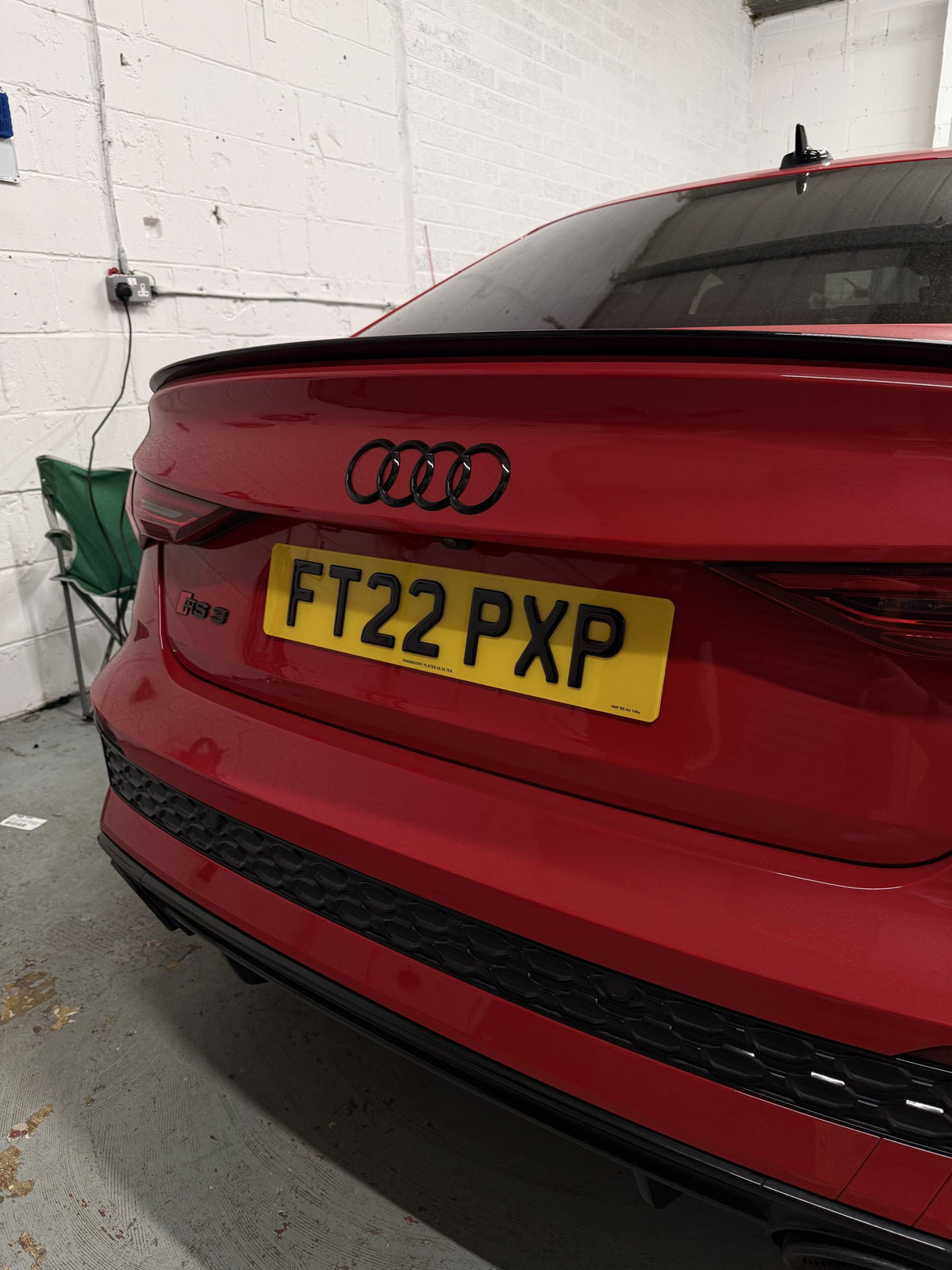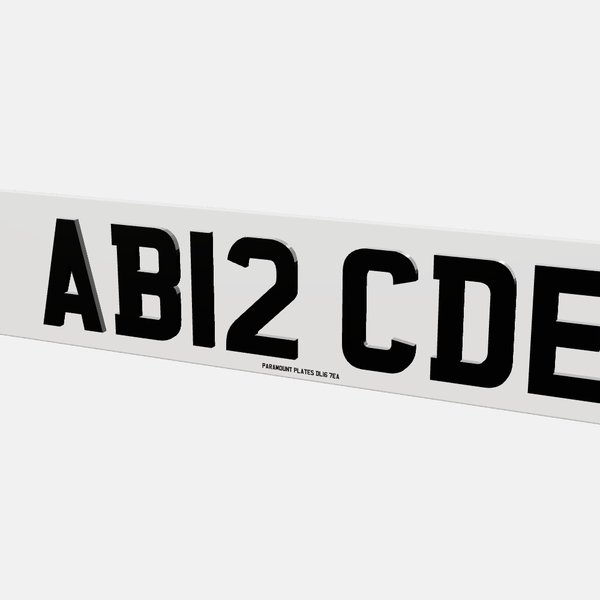
Raised plates need slightly different care from printed ones, for an obvious reason: the characters stand off the surface, so they have edges. Looked after, gel and acrylic characters stay sharp and black for years. Treated like a bumper, they pick up chips, lifted corners and dulled edges that no amount of polish will restore. This guide covers washing, pressure washing, car washes, winter and the few things worth keeping away from them.
Routine washing
Wash plates with the rest of the car: car shampoo, a soft wash mitt or microfibre cloth, and a rinse. Work along the plate rather than scrubbing at individual characters, and rinse from above so grit runs off rather than being dragged across the surface. Dry with a clean microfibre if you dry the car; otherwise let it air dry.
Two things to leave in the garage: abrasive pads and abrasive polishes, which scratch both the reflective surface and the faces of the characters, and solvent cleaners — thinners, acetone, aggressive tar removers — which can attack gel and acrylic. A dedicated tar remover used sparingly on the flat surface and rinsed off promptly is fine; a soaking is not.
Pressure washers and car washes

Our plates are made to be pressure-washed. Keep the lance moving and at a sensible distance — the same distance you would use on paintwork — and do not hold the jet on the edge of a character or on the edge of the plate itself, where it is fixed to the car. Point-blank pressure at an edge is the one thing that can lift a corner over time.
Automatic brush washes are harder on raised characters than a hand wash, because the brushes catch on the edges every time. Plenty of raised plates go through them for years without trouble; if yours does, run a thumb along the character edges every few months and you will catch any lifting long before it shows.
Bird droppings, tree sap and tar
Rinse bird droppings and sap off as soon as you see them. Both are acidic enough to mark a surface if they are left to bake in the sun, and that applies to the reflective face as much as to paint. Soak with water first so they lift rather than smear; do not pick at them with a fingernail on a gel character.
Winter
- Rinse the salt off. Road salt is not corrosive to the plate, but a crust of salt and grit is abrasive, and it also takes the edge off legibility, which is what an MOT tester and a camera care about.
- Do not scrape ice off the characters. An ice scraper against the edge of a raised character is the winter equivalent of a stone chip. Use de-icer or lukewarm water — never boiling water, on the plate or anywhere else on the car.
- Check the fixings. Cold weather is when adhesive pads fitted badly let go. Push each corner of the plate; nothing should move.
Sun and fading
Our plates are UV resistant, and a raised character is a solid piece of black material rather than a layer of ink, so it holds its colour well. What the sun does affect over the years is the reflective surface of any plate. If a plate has clearly dulled or yellowed, it is time to replace it rather than polish it.
Waxing
A light coat of wax or sealant on the flat reflective surface is fine and helps water and dirt run off. Keep abrasive polishes and clay bars off both the surface and the characters; they are for paint.
If something does go wrong
Every plate we make carries a 36-month manufacturer’s warranty from delivery against manufacturing defects — a character lifting on its own, delamination, adhesive failure or warping. Damage from an impact, a scraper or a pressure lance held on an edge is a different matter: that is a replacement set rather than a warranty claim, and our replacement guide walks through it. The law treats a replacement set like any new set of plates, so the supplier must see the same proof of identity and entitlement as for a first order; our documents guide lists what we accept.
Last updated 25 September 2026