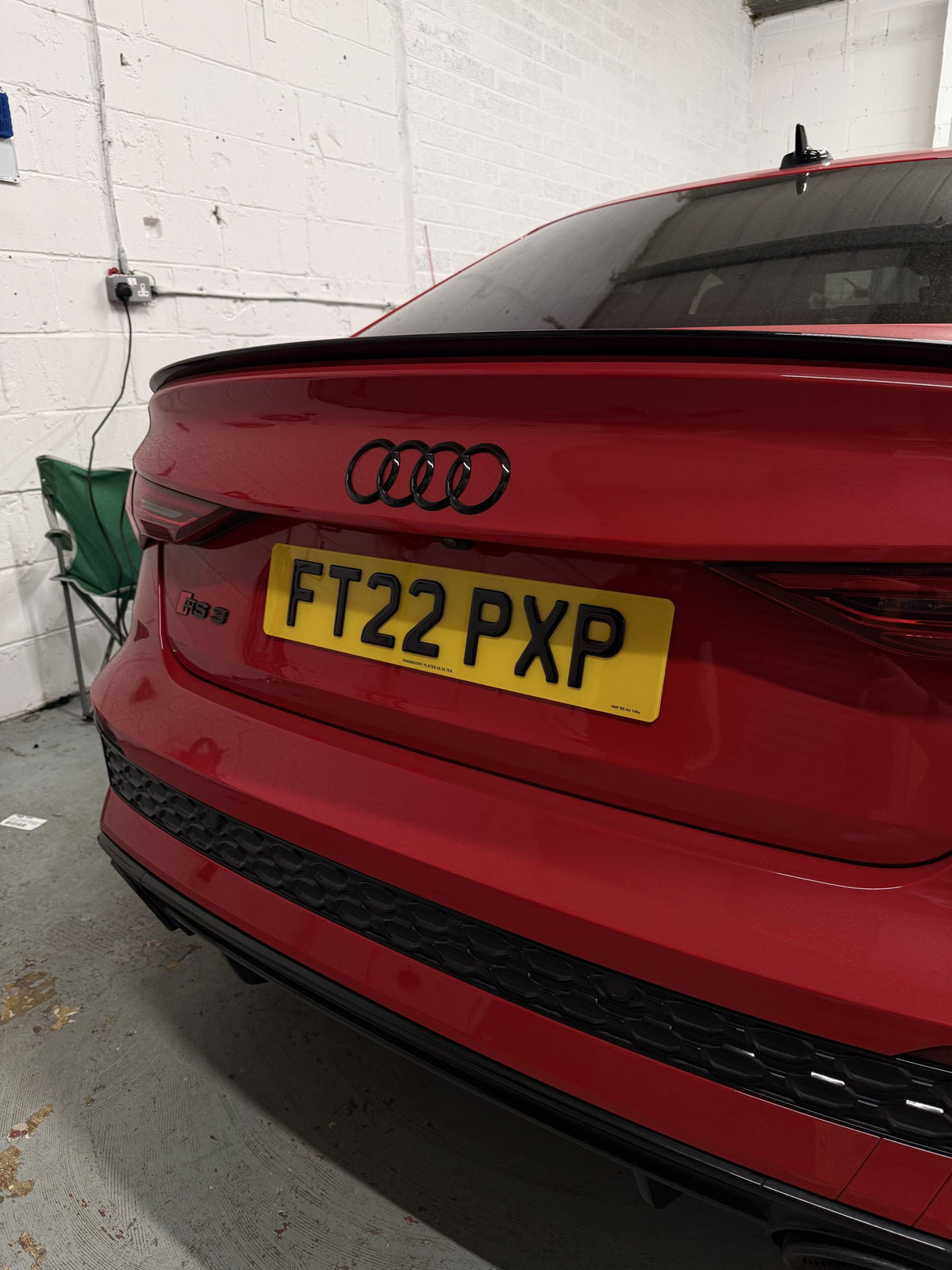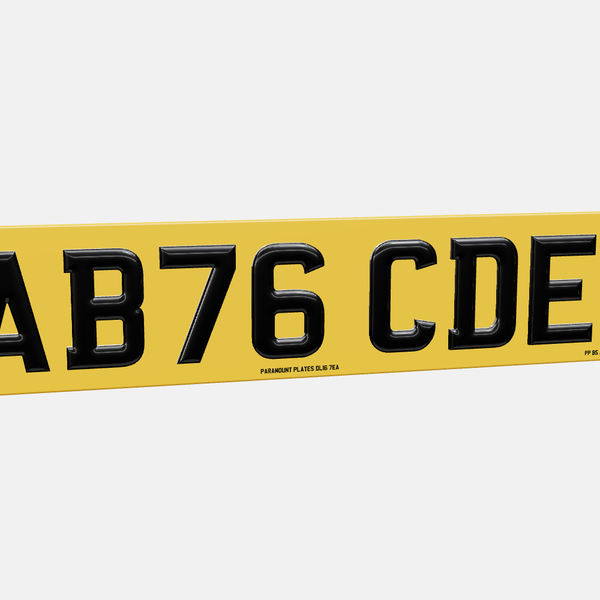
Twice a year the two numbers in the middle of a new car’s registration change. Cars registered from 1 March 2026 carry 26; cars registered from 1 September 2026 carry 76. The numbers are not random and they are not a code for the model year in the way most people assume. This guide explains how the current format works, what each part tells you, and why the age identifier matters if you ever want to put a private plate on your car.
How the current format works
Since September 2001, registrations in Great Britain have used the same seven-character format: two letters, two numbers, a space, then three letters. AB26 CDE, for example. Northern Ireland registrations follow their own format and carry no age identifier. The government’s guide to displaying number plates describes the current format.
- The first two letters are the memory tag: they show the DVLA office area where the vehicle was first registered.
- The two numbers are the age identifier: they show the six-month period in which the vehicle was first registered.
- The last three letters are random, and are what make the registration unique.

The age identifier: 26 and 76
The rule is simpler than it looks. For the period starting in March, the identifier is the last two digits of the year: 26 for March 2026. For the period starting in September, add 50: 76 for September 2026. So:
- 1 March 2026 – 31 August 2026 — 26
- 1 September 2026 – 28 February 2027 — 76
- 1 March 2027 – 31 August 2027 — 27
- 1 September 2027 – 29 February 2028 — 77
The same pattern runs back through the whole scheme: 25 and 75 for 2025, 24 and 74 for 2024, and so on back to 51, the first identifier, issued in September 2001 (there was no 01). The DVLA’s leaflet INF104 lists every identifier. A car carrying 76 was registered no earlier than September 2026, whatever its model year or when it was built.
Why there are two changes a year
Registrations used to change once a year, in August, which concentrated new-car demand into a single month. From 1999 the change was made twice yearly, in March and September, to spread it out; the current format arrived in September 2001 and kept the two dates. March and September are still the busiest months for new registrations, because buyers wait for the new identifier, which is why dealers’ delivery slots fill up in the weeks before each change.
What the memory tag tells you
The first two letters identify the area where the car was first registered, not where it lives now. For example, L is London, B is Birmingham, M is Manchester and Merseyside, N is the North East, S is Scotland, C is Wales and Y is Yorkshire. The second letter narrows it to a particular office within the area. Some letters are never used because they are too easily confused with numbers or with each other: I and Q do not appear at all, and Z appears only among the final three random letters.
What this means for private plates

The age identifier is the reason for the single most important rule in private registrations: you cannot use a registration that makes a vehicle look newer than it is, as the DVLA’s guide to assigning a private number sets out. A 76 registration cannot be assigned to a car first registered before September 2026. A dateless registration can go on a vehicle of any age, which is a large part of why they are prized; the one exception is a Q-registered vehicle, which cannot take a private number at all. Prefix and suffix registrations carry a year letter and follow the same rule as 26 and 76. If you want a private registration on a new 26 or 76 car, give your V750 or V778 to the dealer and ask them to apply for you; if you have just bought one used, wait for the V5C in your name and apply to the DVLA yourself. Our guide to the process walks through it, including the point at which you can display the new number.
Replacing the dealer’s plates
New cars arrive with plain printed plates from the dealer, often with the dealer’s name across the bottom. You can replace them with any finish you like once the V5C in your name arrives from the DVLA, usually within four weeks of the car being registered. The new plates must be made to BS AU 145e by a registered supplier, and the V5C is the document you will use to show entitlement. The green new keeper slip applies when a used car changes hands, not to a brand-new registration. The plate builder shows the registration in every finish before you decide.
Last updated 25 September 2026