Look along the bottom edge of any number plate made in the last few years and you will find a line of small print: the supplier’s name and postcode, the manufacturer’s mark and a British Standard number. Most people never read it. It is there because the law requires it, and it is the quickest way to tell a plate that came through the proper process from one that did not. This guide explains each mark, why it is required, and what to make of a plate that has none.
The marks the law requires

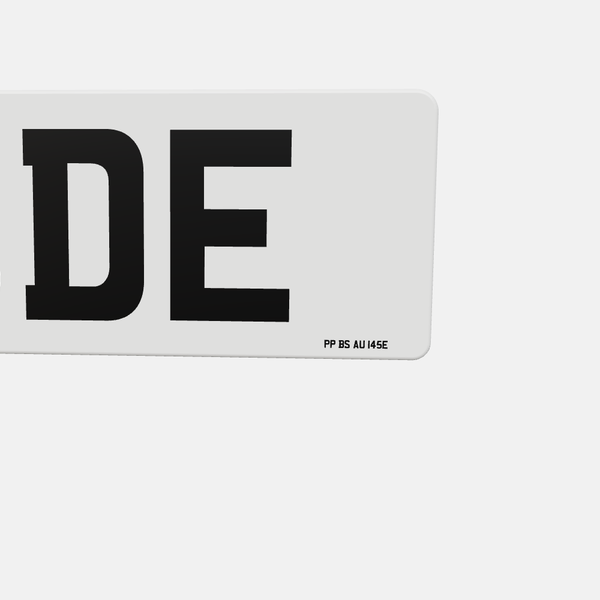
- The British Standard number. Plates fitted since 1 September 2021 must be made to BS AU 145e and marked with it. Plates made to the previous standard, BS AU 145d, remain legal if they were fitted before that date, and you will still see 145d on older cars.
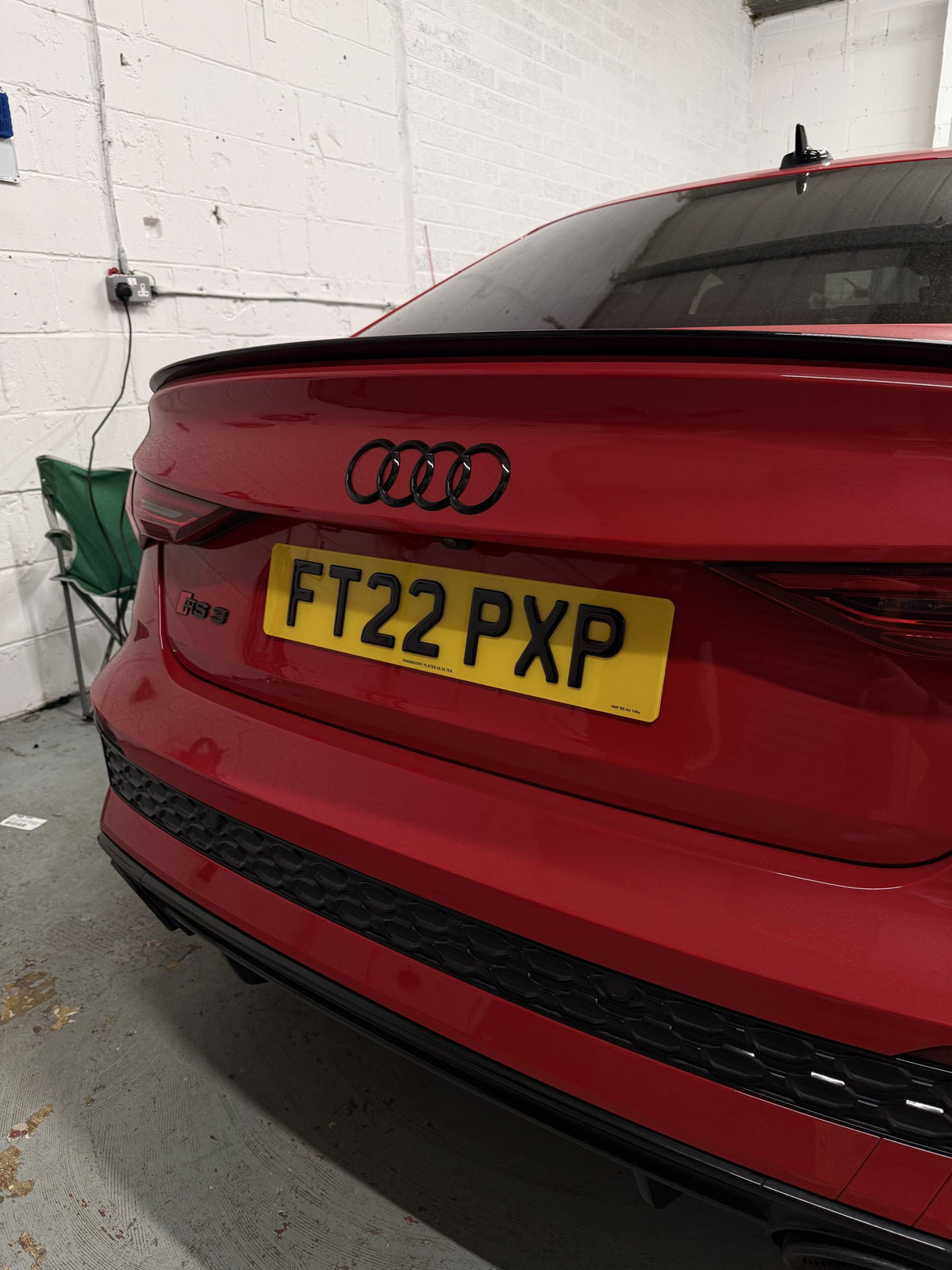
- The supplier’s name and postcode. The name of the business that supplied the plate and the postcode of the premises it was supplied from. On ours this reads PARAMOUNT PLATES DL16 7EA.
- The manufacturer’s mark. The name, trade mark or other identifier of the company that made or supplied the parts the plate is built from, usually printed just before the standard number. This one is required too.
The marks are printed small along the bottom edge, below the registration. The regulations require them to be permanent and non-reflective, between 3mm and 10mm tall, and at least 7mm below the characters. They are part of the plate face rather than a sticker, so they last as long as the plate does.
Why they are required
Number plates can only be sold by suppliers registered with the DVLA, and a registered supplier can only make a plate for a registration after seeing proof of the buyer’s name and address and proof of their entitlement to that registration — our guide to the documents we need lists what counts. The marks make that chain traceable. If a plate turns up on the wrong car, the supplier’s name and postcode lead the police or the DVLA back to a record of who bought it and what documents they showed.
The standard number and the manufacturer’s mark do a different job. Together they say what the plate was made to and whose parts it was made from. The standard sets the reflectivity, strength and durability that a camera and a human need in order to read a plate in the dark, in the rain, and after years on the road.
What a plate without them tells you
A plate with no supplier details and no standard mark was not sold through the registered process. It may be a show plate, sold for display off the road; it may have been made by someone who is not registered; or it may have been sold without the checks the law requires. Whatever the reason, it is not a plate you can rely on being compliant, and the police treat the absence of the marks as a reason to look closely at the rest of it.
This is also why we would rather you did not buy from a supplier who will not tell you what standard their plates are made to. A raised 3D or 4D plate is as legal as a printed one, but only when the plate underneath it meets the standard and says so.
Reading the marks on our plates
Every plate we make carries the marks the law requires along the bottom edge, in the same position on every shape and finish: PARAMOUNT PLATES DL16 7EA as the supplier, and the manufacturer’s mark with the BS AU 145e number. They are printed as part of the face when the plate is made, not added afterwards. If you ever need to show that a plate came from a registered supplier — after a theft, for example, or a query from the police — the marks and your order confirmation are the evidence.
Sources: the Road Vehicles (Display of Registration Marks) Regulations 2001, Schedule 2; GOV.UK, Rules for number plates; DVLA leaflet INF104.
Last updated 25 September 2026